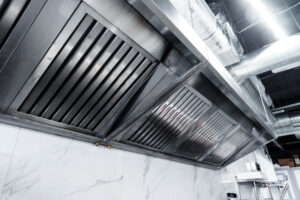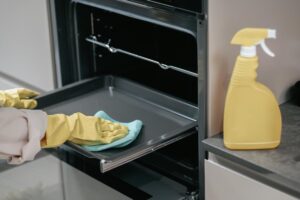
Summer is the busiest season for most commercial kitchens in Ontario — and it’s also the most dangerous for grease accumulation. Higher ambient temperatures, longer service hours, and increased cooking volumes combine to push grease deeper into your exhaust system faster than at any other time of year. If your kitchen ran fine all winter, don’t assume summer will take care of itself. Summer grease buildup in commercial kitchens is a distinct seasonal challenge, and ignoring it is one of the most common reasons restaurants fail surprise health inspections and fire marshal walkthroughs between June and September.
This guide covers exactly why summer accelerates the problem, what your team should be doing differently right now, and when professional intervention is the only responsible option.
Why Summer Heat Accelerates Grease Buildup
Grease buildup isn’t just a function of cooking volume — temperature plays a central role in how quickly it forms and how dangerous it becomes.
Heat Makes Grease More Mobile
At lower temperatures, grease that lands on ductwork and hood surfaces tends to remain relatively viscous and localized. In summer, when kitchen ambient temperatures routinely exceed 35–40°C during service, aerosolized grease particles stay in a more liquid state longer. This means they travel further through your exhaust system before condensing. Grease that might have settled in the hood baffle in January will push deep into the ductwork and fan housing by July, creating buildup in locations your staff can’t see and can’t reach during standard nightly cleaning.
Longer Service Hours Mean More Exposure
Summer tourism, patio season, and event bookings extend service hours across the board. A kitchen that runs 10 hours in February might run 14–16 hours in July. Every additional hour of operation is an additional hour of grease-laden air moving through your exhaust system. The math compounds quickly: a kitchen that normally accumulates significant duct grease in 90 days may reach the same load in 60 during peak summer — or faster if you’ve added fryers or charbroilers to handle patio menus.
Higher Cooking Volumes Stress Your Exhaust System
More covers mean more product moving through fryers, griddles, and charbroilers — the highest-grease cooking equipment in any kitchen. Commercial fryers operating at 175°C push grease-laden steam upward at volume. Charbroilers generate carbonized fat particles that adhere aggressively to exhaust surfaces. When those pieces of equipment run near capacity for extended periods, your hood filters load up quickly and begin bypassing grease into the duct system rather than capturing it at the source.
The Real Risk: Grease Fires Don’t Wait for Inspections
Accumulated duct grease is classified as a Class K fuel. It ignites at approximately 184°C (363°F) — a temperature your kitchen reaches routinely during a busy Friday dinner service. A momentary flare-up from a hot pan, a jet of flame from a gas burner, or a mechanical issue with your suppression system can trigger ignition in grease-laden ductwork. Once a duct grease fire starts, it travels upward through the exhaust path faster than your suppression system can respond, potentially breaching your ceiling and spreading into structural spaces.
Summer’s combination of elevated ambient heat and compressed grease accumulation timelines makes this scenario more likely, not less. Ontario fire marshal records consistently show higher rates of kitchen fire incidents in the summer months — and the majority are traced back to grease accumulation that exceeded safe thresholds before the operator realized it.
For professional exhaust cleaning in Ontario, the intervention timing matters as much as the cleaning itself. Waiting until a buildup is visually obvious means you’ve already passed the point where cleaning should have happened.
What Your Summer Cleaning Schedule Should Look Like
A summer-adjusted cleaning protocol goes beyond your usual nightly routine. Here’s what a properly structured program looks like across three levels:
Daily: Grease Control at the Source
- Baffle filter cleaning: In summer, hood baffle filters should be cleaned daily rather than every 2–3 days. Filters saturated with grease stop functioning as capture devices and begin allowing grease to bypass into the duct system.
- Drip tray and grease cup checks: These fill faster under high-volume conditions. A drip cup that overflows during service creates an immediate ignition point below the cooking surface.
- Cooking equipment wipe-downs: All exterior surfaces of fryers, griddles, and ranges should be wiped down between service periods — not just at close. Grease sitting on hot equipment surfaces during service creates fumes that load the exhaust system.
Weekly: Targeted Deep Cleaning
- Hood plenum interior: The interior surfaces of your exhaust hood — above the baffles but below the duct connection — should be inspected and wiped weekly during summer. This is where grease accumulates first and is most accessible to your team.
- Behind and under cooking equipment: Fryers and ranges should be pulled from the line weekly to clean accumulated grease from the floor and back wall. These areas trap heat and create secondary ignition points.
- Grease trap inspection: Higher volume means faster grease trap loading. Confirm your service provider is on schedule and check that the trap isn’t backing up between services.
Professional Service: Adjust Your Annual Frequency
NFPA 96 — the National Fire Protection Association standard that governs commercial exhaust cleaning in Ontario — sets minimum cleaning frequencies based on cooking volume and equipment type. The standard baseline for most restaurants is quarterly cleaning, but NFPA 96 explicitly requires increased frequency when cooking volume increases. Summer qualifies. Operators who rely on a single annual or semi-annual professional cleaning and don’t adjust for seasonal volume spikes are out of compliance during their busiest months.
If your kitchen runs a high-volume summer program — festivals, tourist season, hotel F&B, stadium concessions — a professional hood and duct cleaning scheduled at the start of summer, and again at peak, is not optional under NFPA 96. It’s required.
Signs Your Grease Buildup Has Reached a Critical Level
Your team may not know what dangerous grease accumulation looks like. Here are the warning signs that require immediate professional attention — not a wait until the next scheduled service:
- Visible grease dripping from hood baffles or duct seams during or after service — indicates the system is oversaturated.
- Smoke in the kitchen that doesn’t clear through the exhaust — a sign the duct is partially or fully obstructed with grease, reducing airflow capacity.
- Grease smell persisting hours after close — indicates residue in the ductwork is off-gassing, a precursor to spontaneous ignition in hot conditions.
- Suppression system nozzles visibly coated with grease — if your Ansul nozzles are grease-clogged, your fire suppression system may fail to activate when needed.
- Small flare-ups during service that wouldn’t normally occur — micro-ignitions in grease-saturated equipment or ductwork are a direct precursor to a major fire event.
If you observe any of these signs, stop operations on the affected cooking line and contact a professional cleaning service before the next service period. This is not a situation where a nightly clean is sufficient.
Summer Grease Management for Specific Kitchen Types
Restaurants and Fast-Casual Operations
High fryer volume and extended patio-season service hours make this segment the most vulnerable to summer grease accumulation. Operators running dedicated deep-fryer lines should treat summer as a trigger for moving from quarterly to monthly professional exhaust inspection — with cleaning performed whenever grease depth in the duct exceeds 1/8″ (NFPA 96 standard for hazardous accumulation).
Hotel Kitchens
Hotel kitchens that run banquet operations in summer face compounded risk: multiple high-BTU cooking lines running simultaneously for extended periods. Summer banquet season often adds 20–30% to cooking load over baseline — a load that can push a kitchen from safe to hazardous grease levels inside 45 days between professional cleanings.
Institutional Kitchens (Schools, Hospitals, Seniors’ Residences)
School kitchens that shut down for summer should schedule a professional deep clean and exhaust inspection before the fall re-opening — not after. Summer dormancy allows any residual grease to oxidize and harden, making it more difficult to remove and more combustible when cooking resumes in September.
Event and Catering Kitchens
Festival and event catering kitchens face burst cooking scenarios where a kitchen that was idle gets pushed to full capacity instantly. Grease buildup from a single large-scale event can rival weeks of normal restaurant service. Professional cleaning before and after major event contracts is the only responsible approach.
Frequently Asked Questions
Does summer really make grease buildup worse, or is that just a sales pitch?
It’s documented in NFPA 96, which explicitly identifies cooking volume as a trigger for increased cleaning frequency. Higher summer cooking volume means shorter intervals between required professional cleanings — this is a compliance standard, not a suggestion. Ontario fire marshals reference NFPA 96 in enforcement actions, so the consequence of ignoring seasonal buildup is real.
How often should we be professionally cleaning our exhaust system in summer?
The NFPA 96 baseline is quarterly for most restaurants, but high-volume operations (fryer-heavy kitchens, hotels, event venues) should move to monthly inspections during summer and clean whenever accumulated grease depth exceeds 1/8″ in the duct. If you’re unsure where you stand, schedule a professional inspection — an honest assessment from a certified technician will tell you exactly what frequency your kitchen requires.
Can my staff handle summer grease cleaning internally?
Staff can and should handle the daily and weekly tasks listed above. But hood-to-fan professional cleaning — which requires disassembling access panels, working inside ductwork, and documenting grease depth per NFPA 96 — must be performed by certified professionals. The equipment, chemistry, and documentation requirements are beyond what an in-house team can provide.
What does NFPA 96 say about summer cleaning specifically?
NFPA 96 (Section 11.4) requires that exhaust systems be inspected and cleaned “at intervals necessary to prevent accumulation of grease.” It then provides baseline intervals (monthly, quarterly, semi-annually, annually) keyed to cooking volume and equipment type — and explicitly states these are minimums. If your cooking volume increases seasonally, your cleaning frequency must increase accordingly. Summer volume increases without cleaning adjustments put Ontario operators out of compliance.
How do I know if my current exhaust cleaning provider is adjusting for seasonal volume?
Ask your provider directly: do they inspect grease depth at each visit, or do they clean on a fixed schedule regardless? A compliant provider under NFPA 96 inspects first, documents grease depth, cleans to bare metal if required, and provides a written service report with before-and-after photos. If your provider isn’t delivering written documentation, they’re not running a compliant program — and your certificate of cleaning won’t hold up to a fire marshal review.
Conclusion: Don’t Let Your Busiest Season Become Your Most Dangerous
Summer is when Ontario commercial kitchens generate the most revenue — and the most grease. The two are directly linked. Failing to adjust your cleaning program for seasonal volume isn’t just a compliance gap; it’s a fire risk, a health inspection liability, and a potential business-ending event compressed into your peak earning window.
AquaForce Power Clean has been protecting commercial kitchens across Southern Ontario for over 26 years. Our technicians perform certified exhaust system cleaning, hood-to-fan service, and grease management programs calibrated to your kitchen’s actual volume — not a one-size-fits-all schedule. We work with restaurants, hotels, healthcare facilities, institutional kitchens, and major event venues across Toronto, Mississauga, Vaughan, and throughout the GTA.
Don’t wait for a fire marshal visit or a failed inspection to find out where your grease levels stand. Request a quote from AquaForce today and get a certified inspection before summer peak hits its hardest. Your kitchen — and your insurance policy — will thank you.