If you run a commercial kitchen, you already know the rhythm. Close the line. Wipe the counters. Sweep and mop. Break down a few pieces. Spray, scrub, squeegee. Get out.
Nightly cleaning is non negotiable. It is the reason you can open tomorrow without last night’s mess staring at you.
But here’s the part that sneaks up on a lot of teams. Nightly cleaning is not the same thing as a deep clean. And if you rely on “we clean every night” as your only plan, there are high risk, out of sight areas that just do not get handled. Not consistently anyway.
Let’s talk about what’s actually missing.
Nightly cleaning is about reset, not restoration
Nightly cleaning is basically a reset. You are getting the kitchen back to a workable, presentable baseline. Removing visible soils, sanitizing food contact surfaces, taking out garbage, and making sure nothing smells weird in the morning.
But nightly cleaning is done under real world constraints. Staff are tired. The checklist is long. The floor is still warm. There’s always that one last order that messes up your timeline. So the cleaning focuses where it has to focus: visible areas, easy access zones, the stuff inspectors and customers would notice first.
Deep cleaning is different. Deep cleaning is restoration. It is the slow, methodical removal of grease buildup, carbonized soil, and hidden gunk that accumulates even in well run kitchens.
The big thing nightly cleaning misses: grease migration
Grease does not politely stay on the cook line. It aerosolizes. It rides steam. It travels upward with heat. It clings to ceilings, walls, light covers, sprinkler heads, and the tops of equipment you do not look at unless you climb.
Over time, that grease film becomes a magnet for dust and debris. Now you’ve got a sticky layer that is harder to remove and, more importantly, becomes a fire risk in the wrong places.
Most nightly cleaning does not include:
- The tops and backs of cooking equipment, especially anything tight to a wall
- The underside of prep tables and shelving lips
- The sides of fryers and ranges where grease creeps down
- Behind equipment on casters that rarely gets rolled out
- Ceiling diffusers, vents, and wall mounted fans that collect oily dust
You can be doing a “good job” nightly and still be building up a problem.
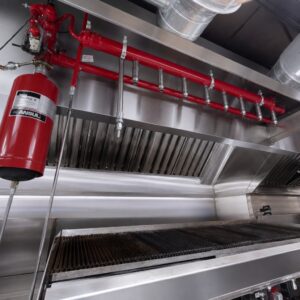
Hood filters get attention. The exhaust system often does not
A lot of kitchens do clean their hood filters regularly. But filters are just the front door.
The real issue is what happens beyond the filters. Grease can accumulate in the hood plenum, ductwork, and on the exhaust fan itself. That is where the risk jumps from “gross” to “dangerous.”
This is also where compliance comes in. NFPA 96 guidelines are the standard reference point for commercial kitchen exhaust fire protection, and inspections or insurance claims can get messy if cleaning is not documented and done properly.
Nightly cleaning does not cover exhaust system cleaning. It cannot. Not without specialized access, tools, and the time to do it safely.
Equipment detailing and hidden buildup
There’s a difference between wiping a slicer and detailing it. Same with mixers, combi ovens, tilt skillets, warming drawers, and refrigeration components.
Nightly cleaning might hit the surfaces. Deep cleaning gets into hinges, handles, seals, gaskets, vents and intake grilles on refrigeration, drain lines, scale and mineral buildup, grease traps around equipment bases, casters, legs, and the floor underneath.
This is where pests and odours start too. Tiny food debris plus moisture plus warmth. That’s the recipe.
Floors are the same story. Mopping is not degreasing, and it is not extraction. Over time, grease layers build up in textured tile, grout lines, corners, floor drains, and behind garbage areas. That’s where slip hazards and that persistent “kitchen smell” come from, even after you clean.
What should a deep clean actually include?
A real commercial kitchen deep clean is usually a top to bottom approach, planned so nothing gets missed:
- Full degreasing of walls, backsplash, and high touch vertical surfaces
- Detailed cleaning of cooking equipment exteriors and surrounding zones
- Pull out cleaning behind and under equipment when accessible and safe
- Floor scrubbing and degreasing, with attention to edges and drains
- Detail cleaning of shelving, undersides, and hard to reach ledges
- Targeted sanitation of areas prone to buildup
And if you want the full safety picture, the exhaust system needs its own dedicated service based on your cooking volume and equipment type.
How do you know when you’re overdue?
Here are a few signals that nightly cleaning is not keeping up:
- You wipe surfaces and they still feel tacky
- The floor stays slippery even after mopping
- There is a lingering odour you cannot identify
- You see dark grease shadows on walls or ceiling tiles
- Staff avoid moving equipment because “it’s nasty back there”
- You are nervous before an inspection, even though you “clean every night”
That’s usually the moment to schedule a proper deep clean and reset the baseline.
A simple way to handle it
Keep nightly cleaning. Tighten the checklist. Train for consistency.
But build deep cleaning into your calendar, not as a panic move. Monthly, quarterly, semi annually — it depends on volume, menu, and equipment. A fryer heavy kitchen will build grease faster than a low temp prep kitchen. No shame in that. It is just physics.
If you’re in Southern Ontario and want someone to look at your setup and tell you what’s realistic, AquaForce Power Clean does commercial kitchen deep cleaning and exhaust and hood services across the GTA and surrounding areas. You can check them out at aquaforce.ca and request a quote for an on site estimate.
The gap between nightly cleaning and deep cleaning is where most of the risk hides. It’s easier to stay ahead of it than to dig yourself out later.
FAQs (Frequently Asked Questions)
What is the difference between nightly cleaning and deep cleaning in a commercial kitchen?
Nightly cleaning is a reset focused on removing visible soils and sanitizing food contact surfaces under time constraints. Deep cleaning is a thorough restoration that removes grease buildup, carbonized soil, and hidden grime in hard-to-reach areas to maintain safety and hygiene.
Why is grease migration a concern that nightly cleaning misses?
Grease aerosolizes and travels with heat and steam, accumulating on ceilings, walls, light covers, and equipment tops. Over time, this creates sticky layers that attract dust and increase fire risk — areas nightly cleaning does not reach.
How important is exhaust system cleaning beyond hood filters?
The exhaust system beyond filters — including hood plenums, ductwork, and exhaust fans — can accumulate significant grease buildup, posing serious fire hazards and NFPA 96 compliance issues. This requires specialized professional cleaning.
How can you tell when your commercial kitchen is overdue for a deep clean?
Signs include surfaces feeling tacky after wiping, floors remaining slippery after mopping, lingering odours, visible grease shadows on walls or ceiling tiles, and general anxiety before inspections despite nightly cleaning.