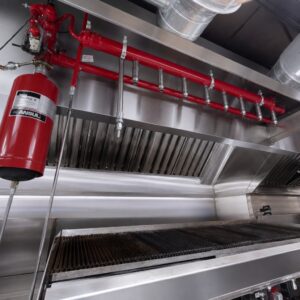
Most kitchen owners do not think about their exhaust system until something goes wrong.
A smoky line during dinner rush. A weird burning smell. A hood that sounds like it is struggling. Or the worst case. A surprise visit from the fire inspector, and suddenly you are learning what “non compliant” really means.
The frustrating part is this. Exhaust failures are rarely one big dramatic mistake. It is usually a bunch of small, obvious issues that add up. And inspectors tend to notice the same patterns again and again.
So let’s talk about the red flags. The stuff that makes an inspector pause, grab a flashlight, and start writing.
Why exhaust systems fail inspections in the first place
NFPA 96 is basically the playbook for commercial cooking fire safety. Inspectors are not just looking for “clean enough.” They are looking for systems that remove grease vapour properly, do not leak, and can be accessed and serviced the way the code expects.
And grease is the villain here. Grease builds up, turns into fuel, and once it lights, it spreads fast through ductwork. That is why inspections get picky about cleanliness, access, and equipment condition. It is not cosmetic. It is fire behavior.
Red flag 1: Grease buildup you can see (and plenty you cannot)
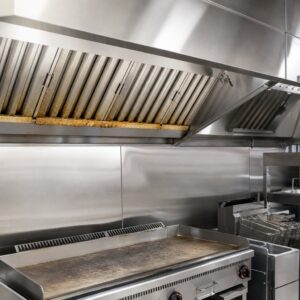
If an inspector can wipe a finger inside the hood and pull back thick grease, you are already in trouble. Same for the underside of filters, the plenum area, and the first visible section of duct.
But the bigger issue is what is happening where nobody looks. Vertical risers. Long horizontal runs. Elbows. The fan housing up on the roof.
A common fail is when the hood looks “decent” from the floor, but the duct and fan are loaded. Inspectors know this trick, and they will ask for service reports or look for access panels so they can verify.
What to watch for:
- Dripping grease or streaks on hood seams
- Heavy grease on filter tracks
- A plenum that looks painted with oil
- Roof fan that is greasy on the exterior or has black staining around it
Red flag 2: Missing or inadequate access panels
This one is huge. If you cannot access the duct for inspection and cleaning, then it is basically impossible to prove the system is being maintained.
Inspectors often flag:
- No access panels on long duct runs
- Panels that are too small to actually clean through
- Panels that are buried behind walls or ceilings with no clearance
- Panels that are not grease tight or not properly fastened
And yes, even if your contractor installed it that way years ago, it is still your responsibility to bring it up to standard once it becomes an issue.
Red flag 3: Filters installed wrong, damaged, or just… gross
Baffle filters are supposed to be installed correctly so grease flows into the collection channel, not back into the hood cavity. If filters are backwards, missing, warped, or swapped with the wrong type, an inspector is going to call it out.
Other easy giveaways:
- Filters with thick grease layers that never fully come clean
- Filters that do not sit flush, leaving gaps
- Missing grease cups or troughs
- Evidence that filters are being “washed” but not really degreased
This is one of those “quick visual” items inspectors love because it tells them how serious you are about maintenance.
Red flag 4: Leaking ductwork or failed seams
Exhaust ducts should be grease tight. If seams are leaking, you get grease migrating into ceiling cavities, walls, and other places you definitely do not want combustible residue.
Inspectors may notice:
- Grease stains on duct exterior
- Drips collecting on top of the hood or on nearby surfaces
- Tape patches or sloppy sealant jobs
- Rust and corrosion, especially near joints
Leaks also hint at deeper problems like poor installation, vibration issues, or years of deferred cleaning.
Red flag 5: Rooftop fan problems (the part most people forget)
Roof fans are like the attic of the exhaust system. Out of sight, out of mind.
But inspectors go up there. And rooftop issues are common reasons systems fail.
Look for:
- Fan housing and hinge kit packed with grease
- No grease containment system, or it is overflowing
- Broken or missing hinge kit, making safe cleaning difficult
- Excessive vibration, noise, or wobble
- Grease splatter on the roof membrane (a big deal for fire and building damage)
A dirty fan is not just a cleanliness problem. It is performance. Airflow drops, smoke spills back into the kitchen, and grease deposits increase faster throughout the duct.
Quick self check you can do this week
Walk your kitchen with a flashlight and look for:
- Grease on hood seams, behind filters, and in the plenum
- Filters seated correctly, no gaps
- Grease cups present and not overflowing
- Access panels visible and reachable
- Roof fan condition, if you can safely view it
- Your last cleaning report, and whether it matches your cooking volume
If any of that feels uncertain, that is the point. Exhaust systems do not fail inspections randomly. They fail in predictable ways.
Catch the red flags early, and the inspection becomes boring. Which is exactly what you want.
FAQs (Frequently Asked Questions)
Why do most commercial kitchen exhaust systems fail inspections?
Most commercial kitchen exhaust systems fail inspections due to multiple small, obvious issues rather than one big mistake. Common reasons include grease buildup, inadequate access panels, damaged or improperly installed filters, leaking ductwork, rooftop fan problems, lack of maintenance documentation, fire suppression system issues, and underperforming exhaust. Inspectors look for compliance with NFPA 96 standards focused on grease removal, system integrity, and serviceability to prevent fire hazards.
What are the signs of grease buildup that can cause an exhaust system to fail inspection?
Visible signs of problematic grease buildup include thick grease inside the hood that can be wiped off with a finger, heavy grease on filter tracks, oil-painted plenum areas, dripping grease or streaks on hood seams, and greasy or black-stained roof fans. Grease hidden in vertical risers, long horizontal ducts, elbows, and fan housings is also a critical concern since it fuels fast-spreading fires if ignited.
What common filter issues cause exhaust systems to fail inspections?
Filters must be correctly installed baffle types that channel grease into collection trays rather than back into the hood cavity. Failures include backward installation, missing or warped filters, use of wrong filter types, thick layers of uncleaned grease on filters, filters not sitting flush causing gaps, missing grease cups or troughs, and improper cleaning methods that don’t fully degrease the filters. These issues indicate poor maintenance practices.
What documentation should kitchen owners keep to pass exhaust system inspections?
Kitchen owners should maintain detailed records including cleaning invoices and reports from service providers; before-and-after photos of cleaned areas; notes on any repairs or modifications like new access panel installations; and a cleaning schedule aligned with cooking volume. Having this documentation readily available reduces inspector doubt and scrutiny by proving consistent maintenance efforts.