Health inspections are weirdly stressful. Even if you know your kitchen is “pretty clean”, the inspector is looking for proof. Not vibes.
And in a commercial kitchen, proof usually shows up in two places:
- What they can see right now.
- What you can show them happened over time.
So this is a practical list of cleaning proofs you can keep ready. Some are physical, some are documentation, and a few are those small details inspectors love to zoom in on when they’re deciding whether to write you up.
1. A signed daily cleaning checklist (with real timestamps)
Not a blank sheet on a clipboard. Not one signature for a whole week.
A daily list that shows who cleaned what, when. If you have multiple shifts, even better. Inspectors love consistency.
2. Sanitizer logs (and matching test strips)
If you’re using quats or chlorine sanitizer, you need to prove the concentration is correct.
Keep test strips on site. Keep a simple log. If the bucket is at the station but the strips are buried in an office drawer, it looks like you’re guessing.
3. A “what gets cleaned when” master schedule
Daily, weekly, monthly. Ideally posted where staff actually see it.
This is the one that covers the less obvious stuff: behind fridges, under shelving, inside gaskets, ceiling vents, floor drains. The things that don’t get hit during a busy close.
4. Clean and labeled chemical bottles
Every spray bottle should be labeled. No mystery blue liquid.
Also, store chemicals away from food and single use items. If an inspector sees unlabeled bottles near prep, it’s an easy strike.
5. A clearly organized 3 compartment sink setup
Wash, rinse, sanitize. And yes, inspectors notice if staff “sanitize” with lukewarm water and hope.
Proof here is simple: signage above the sink, proper setup, sanitizer concentration verified.
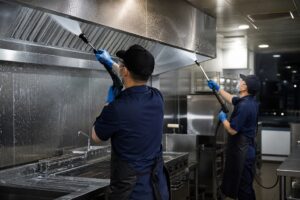
6. No grease buildup on the hood, filters, or duct access areas
This is a big one. Grease is fire risk plus it screams neglected maintenance.
Even if your line is spotless, a greasy hood system can pull attention fast, especially if the inspector knows the local fire code expectations.
If you want this handled properly and documented, companies like AquaForce Power Clean specialize in commercial kitchen deep cleaning and exhaust hood and vent cleaning with NFPA 96 in mind. And they’ll typically give you service records you can keep on file.
7. Hood cleaning service reports and before/after documentation
If you use a pro service for exhaust cleaning, keep the invoice, report, and any photos.
This is the kind of proof that ends the conversation quickly, in a good way.
8. Clean fryer area (not just the fryer)
Inspectors look at the sides, the back, the floor underneath, and the wall behind it.
Proof is visible: no sticky grease on tiles, no oil trails, no dusty crumbs glued to a film of old fat.
9. Refrigeration temperature logs
Do you have to log temps constantly? Not always, depends on your operation and local requirements. But having logs is a strong signal you’re controlling food safety, not reacting to problems.
Also, make sure the actual fridge thermometer matches your log entries. Inspectors do check.
10. Gasket and door track cleanliness
That black buildup around door seals is one of the most common “how did nobody notice this” moments.
Proof is simple: white cloth test. If you wipe the gasket and it comes back gray, you’re not inspection ready.
11. Floors and corners that look intentionally cleaned
Floors get swept, sure. But inspectors look for:
- Edges along walls
- Under equipment
- Corners behind doors
- Under mats
Proof is the absence of old debris and grease in those “nobody looks here” spots.
12. Floor drain cleanliness (and a drain cleaning record)
Drains are a smell source and a pest source. They’re also a favorite inspection checkpoint.
Proof can be a weekly drain cleaning log, plus the obvious visual: no slime ring, no fruit flies hovering like it’s a nightclub.
13. No standing water, anywhere
Standing water under sinks, behind dish machines, near floor drains. It hints at leaks, poor cleaning, and pest attraction.
Proof is visual and immediate. Dry floors in the back of house are underrated.
14. Pest control records and a clean “no harborage” setup
If you use a pest control company, keep the reports. If you don’t, you still need to show prevention.
Proof includes:
- No open food stored on the floor
- Tight lids on bins
- Clean dry storage shelving
- No clutter piles behind equipment
15. Properly stored and air dried utensils and equipment
Towels drying dishes, stacking wet containers, nesting wet cambros. It all creates microbial risk.
Proof is how things are stored right now: inverted, dry, off the floor, organized.
16. Handwashing stations that are actually usable
This sounds obvious, but I’ve seen sinks blocked by bus bins or a stack of trays.
Proof checklist:
- Soap present
- Paper towels present
- Warm water works
- Handwashing sign posted
- Sink not used for dumping or storage
17. A deep cleaning record for “hard stuff” like behind lines and equipment
Daily wipe downs aren’t enough forever. Eventually, you need a real reset.
If you schedule periodic deep cleans, keep the record. If you hire it out, keep the invoice and scope.
This is where a commercial crew can make your life easier. If you’re in Southern Ontario, AquaForce Power Clean does full service commercial kitchen deep cleaning plus hood and exhaust work, and it’s the kind of documentation that helps when inspectors ask, “When was the last time this was properly cleaned?”
A quick way to use this list without overthinking it
Print it. Walk your kitchen once a week like you’re the inspector. Pick 3 things. Fix them. Log it.
Because passing an inspection isn’t about pulling off a miracle cleaning the night before. It’s about showing a pattern.
If you want help getting your kitchen back to a solid baseline, especially the grease heavy areas like exhaust systems, hoods, and hard to reach buildup, you can request a quote or schedule an on site estimate through AquaForce Power Clean. It’s a pretty straightforward way to turn “we clean regularly” into actual proof you can show.
FAQs (Frequently Asked Questions)
What kind of proof do health inspectors look for in a commercial kitchen?
Health inspectors typically look for two types of proof: what they can see at the moment of inspection, and documentation showing consistent cleaning and maintenance over time. This includes physical cleanliness as well as records like cleaning checklists, sanitizer logs, and service reports.
What are some critical areas often overlooked but important during health inspections?
Inspectors pay close attention to less obvious spots like behind refrigerators, under shelving, inside door gaskets, ceiling vents, floor drains, and grease buildup on hoods or filters. Having a master cleaning schedule covering these areas helps ensure thorough cleanliness and inspection readiness.
How can professional hood cleaning services help with health inspections?
Professional exhaust hood cleaning companies provide deep cleaning compliant with NFPA 96 standards and supply service reports, invoices, and before/after photos. Keeping these documents on file serves as strong proof of maintenance and can quickly satisfy inspector concerns about fire risk and grease buildup.
What are key signs of good pest control practices that inspectors look for?
Inspectors expect pest control records if you use a service. If not, they look for prevention measures such as no open food stored on the floor, tightly sealed bins, clean dry storage shelving, no clutter behind equipment, and overall absence of pest harborage conditions.