Kitchen Hood Cleaning Isn’t Optional — It’s the Law
If you own or manage a restaurant in Ontario, commercial kitchen hood cleaning frequency isn’t something you get to decide based on how dirty things look. Ontario’s fire code and NFPA 96 set mandatory cleaning schedules based on your cooking volume and type — and falling behind puts your business at risk of fines, failed inspections, and kitchen fires.
The challenge is that many operators don’t know exactly how often their hoods need professional cleaning, or they assume a quarterly schedule covers everything. It doesn’t. Here’s the complete breakdown of what Ontario fire code requires, how NFPA 96 sets the standard, and how to build a cleaning schedule that keeps your kitchen compliant and safe.
What NFPA 96 Says About Hood Cleaning Frequency
The Four Frequency Tiers
NFPA 96 — the standard Ontario’s fire code references — divides commercial kitchens into four cleaning frequency tiers based on cooking type and volume:
| Cooking Type | Required Cleaning Frequency | Examples |
|---|---|---|
| Solid-fuel cooking | Monthly | Wood-fired pizza ovens, charcoal grills, mesquite smokers, tandoor ovens |
| High-volume cooking | Quarterly (every 3 months) | 24-hour diners, charbroil-heavy steakhouses, wok kitchens, busy quick-service restaurants |
| Moderate-volume cooking | Semi-annually (every 6 months) | Full-service restaurants, hotel kitchens, school cafeterias with regular fry cooking |
| Low-volume cooking | Annually | Churches, seasonal concessions, camps, senior centres with light cooking |
These are minimum frequencies. If grease buildup is visible or heavy between scheduled cleanings, you need to increase the frequency — regardless of what tier you fall into.
How Ontario Fire Code Enforces These Standards
Ontario’s Fire Protection and Prevention Act references NFPA 96 as the governing standard for commercial cooking operations. Fire inspectors in Ontario check exhaust system cleanliness during routine inspections and can issue orders requiring immediate cleaning if grease buildup exceeds safe levels.
What inspectors look for specifically:
- Grease depth on interior surfaces: Any visible grease accumulation beyond a thin film is a red flag
- Cleaning certificates: A dated, signed NFPA 96 compliance certificate from a qualified cleaning company
- Baffle filter condition: Filters should be clean and properly seated — missing or damaged filters are an automatic citation
- Fan and ductwork access: Inspectors may check whether fans and ducts are included in the cleaning scope, not just the hood canopy
Failing an inspection doesn’t just mean a fine. In serious cases, the fire marshal can order your kitchen shut down until remediation is complete.
Why Most Kitchens Need More Frequent Cleaning Than They Think
The “We Look Clean” Trap
The most common mistake restaurant operators make is judging cleaning needs by visible grease on the canopy exterior. The hood canopy — the part you can see — is only one component of the exhaust system. The real fire risk lives inside:
- The plenum chamber (the space behind the filters) accumulates grease that’s invisible from the cooking line
- Ductwork running from the hood to the roof fan collects grease over its entire length
- Roof-mounted exhaust fans build up grease around blades and housings
A kitchen that looks clean on the surface can have dangerous grease deposits inside the exhaust system. This is exactly what fire prevention through exhaust cleaning is designed to address — the hidden buildup that causes kitchen fires.
Factors That Increase Your Cleaning Frequency
Even if your cooking type suggests semi-annual cleaning, several factors can push you into a quarterly or even monthly schedule:
- Extended operating hours: Kitchens running 12+ hours per day accumulate grease faster than the standard schedule accounts for
- Heavy frying or charbroiling: These cooking methods produce significantly more grease-laden vapour than baking or steaming
- Multiple cooking stations under one hood: Higher volume per hood means faster buildup
- Older exhaust systems: Systems with rougher interior surfaces trap grease more readily than smooth stainless steel
- Seasonal volume spikes: Restaurants with busy patios or holiday rushes may need an extra cleaning during peak periods
What a Proper Hood Cleaning Includes
The Full Scope — Not Just a Wipe-Down
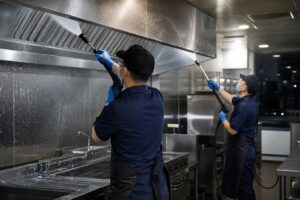
An NFPA 96-compliant hood cleaning is far more intensive than removing baffle filters and wiping the canopy. A qualified cleaning company will clean the entire exhaust system from the hood to the roof:
- Baffle filter removal and degreasing: Filters are removed, soaked, and scrubbed to remove all grease accumulation
- Hood canopy and interior cleaning: All interior surfaces are scraped and degreased back to bare metal — the NFPA 96 standard for clean
- Plenum chamber cleaning: The space behind the filters is accessed and thoroughly degreased
- Ductwork cleaning: The full length of ductwork is accessed through service openings and cleaned of all grease deposits
- Fan cleaning: Roof-mounted fans are opened, and blades, housings, and drain pans are degreased
- Before-and-after documentation: Photos of every surface, pre- and post-cleaning, with a signed compliance certificate
If your current cleaning provider only addresses the hood canopy and filters, your exhaust system is not being cleaned to NFPA 96 standards — and you won’t pass a thorough fire inspection.
Building Your Kitchen’s Cleaning Schedule
Step 1: Determine Your Cooking Volume Tier
Start with the NFPA 96 frequency table above. Be honest about your cooking type — if you charbroil daily, you’re in the high-volume tier even if your restaurant is small.
Step 2: Assess Additional Risk Factors
Review the factors above (hours of operation, cooking methods, system age). If two or more apply, move up one frequency tier. A moderate-volume kitchen with extended hours and heavy frying should follow a quarterly schedule.
Step 3: Set Calendar Reminders
Don’t rely on memory or visual checks. Set calendar reminders for your cleaning dates at the start of the year. Share the schedule with your cleaning provider so they can book the work in advance.
Step 4: Maintain Between Professional Cleanings
Between professional cleanings, your staff should maintain the system daily:
- Clean baffle filters weekly (or more often in high-volume kitchens) using the deep clean vs nightly cleaning framework
- Wipe down the hood canopy exterior at the end of every shift
- Check grease cups and drain pans daily — empty when half full
- Report any unusual smells, smoke backup, or reduced airflow immediately
The Cost of Non-Compliance
Financial and Operational Risks
Skipping or delaying hood cleanings creates compounding risk:
- Fire damage: Grease fires in exhaust systems are among the most destructive and fastest-spreading commercial fires. The average kitchen fire causes $30,000–$70,000 in damage — and can total a restaurant
- Insurance complications: Many commercial insurance policies require proof of NFPA 96-compliant cleaning. Without current certificates, your claim may be denied
- Closure orders: Fire inspectors can order immediate kitchen closure if they determine an imminent fire hazard exists
- Fines: Ontario fire code violations carry fines that increase with each repeated offence
- Liability: If a fire injures staff or customers, non-compliance with cleaning standards becomes a significant legal liability
The ROI of Staying Compliant
Professional hood cleaning is one of the most cost-effective investments a restaurant can make. A typical hood cleaning in Ontario costs between $300 and $600 per visit, depending on the size and complexity of your system. Compare that to the cost of a single fire, a failed inspection, or a denied insurance claim — compliance is significantly cheaper than the alternative.
FAQ
How often does Ontario require commercial kitchen hood cleaning?
Ontario follows NFPA 96 standards, which require cleaning monthly for solid-fuel cooking, quarterly for high-volume operations, semi-annually for moderate-volume kitchens, and annually for low-volume cooking. Your specific frequency depends on your cooking type and volume.
What happens if I fail a fire inspection for hood cleaning?
Fire inspectors can issue compliance orders requiring immediate cleaning, impose fines, or in serious cases, order your kitchen closed until the exhaust system meets NFPA 96 standards. Repeated violations result in escalating penalties.
Can I clean my commercial kitchen hood myself?
Staff can maintain baffle filters and wipe down the canopy between professional cleanings, but NFPA 96-compliant exhaust system cleaning must be performed by a qualified professional. This includes accessing and cleaning the plenum, ductwork, and rooftop fan — areas that require specialized equipment and training.
Does my insurance require proof of hood cleaning?
Most commercial property and restaurant insurance policies include a clause requiring regular kitchen exhaust cleaning per NFPA 96. Without dated cleaning certificates, your insurer may deny fire-related claims. Check your policy and keep certificates on file.
Stay Compliant, Stay Open
Commercial kitchen hood cleaning isn’t just about passing inspections — it’s about protecting your staff, your customers, your investment, and your livelihood. Knowing your NFPA 96 frequency tier, scheduling cleanings proactively, and maintaining your system between visits keeps your kitchen running safely and your business in good standing with Ontario fire authorities.
If you’re not sure where your kitchen falls on the frequency scale — or it’s been too long since your last professional cleaning — request a quote and get back on schedule before your next inspection.