Hotel Kitchen Cleaning: Standards, Schedules & Best Practices for Ontario Hotels
Hotel kitchen cleaning is one of the most demanding maintenance challenges in the hospitality industry. Unlike a standalone restaurant, a hotel kitchen operates across multiple service periods — breakfast, room service, banquets, and à la carte dining — often running 18 or more hours a day. That continuous operation accelerates grease accumulation, creates compounding compliance obligations, and puts your kitchen staff, guests, and food safety certification on the line simultaneously. For hotel operators across Southern Ontario — from downtown Toronto properties to Mississauga conference centres — the stakes are uniquely high: one failed health inspection or kitchen fire can shutter your food & beverage operation overnight and send shockwaves through your reputation. This guide covers what a professional hotel kitchen cleaning program looks like, what Ontario regulations require, and how leading hotel brands keep their kitchens inspection-ready year-round.
Why Hotel Kitchen Cleaning Demands a Higher Standard
Hotel kitchens face cleaning challenges that most freestanding restaurants never encounter. Understanding those differences is the first step to building an effective maintenance program.
Volume and Operational Hours
A full-service hotel kitchen may serve hundreds of covers at breakfast, run continuous room service from 6 a.m. to midnight, and flip the same line for a 300-person banquet in the same evening. That volume generates grease, carbon deposits, and biological residue at a rate that conventional nightly cleaning schedules simply cannot keep pace with. Grease migrates into exhaust ducts, accumulates behind cooking equipment, and settles into floor traps — all while your team is focused on the next service.
Multiple Cooking Zones and Equipment Types
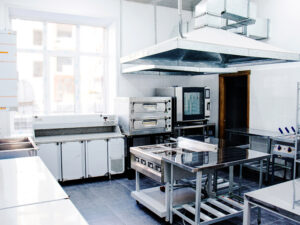
Hotel kitchens typically include distinct cooking stations — garde manger, hot line, banquet prep, pastry, and often a dedicated room service window — each with its own equipment profile. Fryers, combi ovens, charbroilers, steamers, and induction stations all create different types of residue and require different cleaning chemistry and techniques. A cleaning program that works for a burger counter won’t address the carbonized protein buildup on a wood-fired grill or the sugar char inside a pastry oven.
Brand Standards and Third-Party Audits
International hotel brands — Marriott, Hilton, Sheraton, IHG, and others — impose their own property standards on top of local health codes. Franchisees and managed properties are subject to unannounced brand audits that evaluate kitchen cleanliness, equipment condition, and documentation. Failing a brand audit can trigger remediation timelines, management reviews, and in severe cases, franchise agreement consequences. Local municipal health inspections add another layer: Toronto Public Health and Peel Region Public Health can issue closure orders for critical violations, with inspections posted publicly on DineSafe and EatSafe respectively.
Ontario Regulations That Apply to Hotel Kitchens
Hotel operators in Ontario must navigate several overlapping regulatory frameworks. Knowing what each one requires — and which agency enforces it — is essential for staying compliant.
Ontario Food Premises Regulation (O. Reg. 493/17)
Ontario Regulation 493/17 under the Health Protection and Promotion Act governs all food premises, including hotel kitchens. It requires that all surfaces, equipment, and utensils that come into contact with food be maintained in a clean and sanitary condition. The regulation mandates adequate ventilation systems capable of removing grease, heat, steam, and odours — and those systems must be kept free of grease buildup that could become a fire hazard. Inspecting public health officers assess compliance during routine and complaint-driven inspections, and critical infractions can result in immediate closure orders.
NFPA 96: Standard for Ventilation Control and Fire Protection
The exhaust and hood cleaning component of hotel kitchen maintenance is governed in Ontario by NFPA 96, the Standard for Ventilation Control and Fire Protection of Commercial Cooking Operations. NFPA 96 sets mandatory cleaning frequencies for exhaust hoods, ducts, fans, and grease traps based on cooking volume and type:
- High-volume cooking (solid fuel, wok cooking): Monthly cleaning
- High-volume standard cooking: Quarterly cleaning
- Moderate-volume cooking: Semi-annual cleaning
- Low-volume cooking: Annual cleaning
Most full-service hotel kitchens qualify as high-volume operations and require quarterly exhaust cleaning at minimum. After every cleaning, a certified technician must affix a service sticker to the hood indicating the date of cleaning and the next scheduled service date — documentation your fire inspection will specifically look for.
Toronto Fire Code and Peel Region Requirements
Properties in Toronto and Peel Region (which includes Mississauga and Brampton) must also comply with local fire codes that reference and often exceed NFPA 96 requirements. The Toronto Fire Services inspects commercial kitchens and will cite properties where exhaust systems show evidence of grease accumulation beyond safe thresholds. Violations can result in orders to comply, fines, and mandatory shutdowns until corrective action is verified.
The Hotel Kitchen Cleaning Schedule: What Best-in-Class Looks Like
The most successful hotel F&B operations run layered cleaning programs — nightly tasks handled by kitchen staff, and periodic deep cleaning performed by certified commercial cleaners.
Nightly Cleaning (Kitchen Staff)
Every service shift should end with a structured nightly close that includes:
- Degreasing all cooking surfaces, grill grates, and fryer baskets
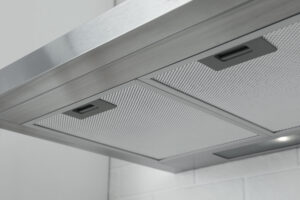
- Wiping down hood filters and drip trays (not a substitute for professional hood cleaning)
- Cleaning and sanitizing all prep surfaces, cutting boards, and smallwares
- Sweeping and mopping all kitchen floor areas, including under equipment where accessible
- Emptying and sanitizing floor drains
- Removing all food debris from behind and beneath cooking equipment
Weekly Deep Clean (Kitchen Staff + Supervisor Sign-Off)
- Pull and clean hood filters in degreasing solution
- Clean behind all cooking equipment (pull-out where possible)
- Degrease all wall tiles and backsplash surfaces
- Clean inside ovens and combi-steamers
- Inspect and clean grease traps (or confirm service schedule)
Quarterly Professional Service (Certified Cleaning Contractor)
Professional commercial kitchen cleaning at the quarterly interval covers what in-house staff cannot safely or effectively address:
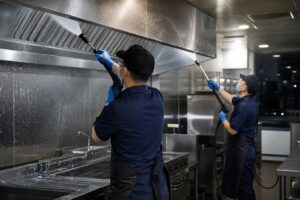
- Full exhaust system cleaning — hoods, ducts, risers, fans, and rooftop exhaust units cleaned to bare metal per NFPA 96
- Certified documentation — service reports and stickers that satisfy fire inspections and brand audits
- Deep equipment degreasing — fryers, charbroilers, convection ovens, combi units pulled out and cleaned on all sides
- Floor drains and grease traps — professional-grade biological treatment and physical cleaning
- Ceiling canopies and ventilation diffusers — often overlooked surfaces that accumulate grease vapour over time
Special Considerations for Hotel Banquet Kitchens
Banquet operations present a distinct cleaning challenge. A hotel hosting a 500-person gala will push its kitchen to capacity — then that same kitchen needs to be inspection-ready for the morning breakfast rush. Banquet cooking involves high-intensity bursts of heat cooking (roasting, sautéing, chafing dish service) that deposit significant grease in a short time.
Post-Event Cleaning Protocol
After any major banquet service, the banquet kitchen should receive a targeted post-event cleaning that mirrors a nightly deep clean at elevated intensity. Chafing dish fuel residue, roasting pan carbon deposits, and carving station grease all need to be addressed before the next service — not left to accumulate. Hotels that run back-to-back events without post-event cleaning typically see accelerated grease buildup in their exhaust systems, shortening the safe interval between professional cleanings.
Scheduling Professional Cleaning Around Occupancy
One of the practical challenges hotel operators face is scheduling professional exhaust and kitchen cleaning around a calendar that never fully goes dark. Experienced commercial kitchen cleaners — like the AquaForce team, which has serviced Marriott and Sheraton properties across Southern Ontario — can work overnight shifts, off-peak windows, and coordinate with your F&B director to minimize service disruption.
Frequently Asked Questions
How often should a hotel exhaust system be professionally cleaned?
Most full-service hotel kitchens qualify as high-volume operations under NFPA 96, which requires quarterly exhaust cleaning. Hotels with exceptionally high banquet volumes or solid-fuel cooking stations may require monthly service. Your cleaning contractor should assess your operation and recommend a frequency that keeps grease levels within safe and compliant thresholds between visits.
What documentation should a hotel keep after professional kitchen cleaning?
You should retain the technician’s before-and-after photos, a signed service report detailing the scope of work performed, and a copy of the service sticker affixed to the hood. Keep these records for a minimum of two years — they are routinely requested during fire code inspections and brand audits. Some brand standards (Marriott, IHG) require that documentation be available in digital format through their audit portals.
Can hotel kitchen staff perform exhaust duct cleaning themselves?
No. NFPA 96 requires that exhaust duct cleaning be performed by trained technicians with the proper equipment to clean to bare metal. Kitchen staff can clean accessible hood filters and drip trays as part of regular maintenance, but duct cleaning requires pressure washing equipment, chemical degreasers rated for grease duct use, and the ability to access duct cleanouts throughout the system. Attempting in-house duct cleaning voids most commercial kitchen insurance policies and will not satisfy fire inspection requirements.
What happens if a hotel kitchen fails a fire inspection for grease buildup?
The Toronto Fire Services or local fire marshal can issue an Order to Comply, requiring that violations be corrected within a specified timeframe — sometimes as short as 24–72 hours for critical fire hazards. If the violation is not corrected, the authority can prohibit the use of the cooking equipment or close the kitchen until compliance is confirmed. This kind of shutdown during peak season can cost a full-service hotel tens of thousands of dollars in lost F&B revenue and guest satisfaction penalties.
Does AquaForce service hotel kitchens in the GTA?
Yes. AquaForce Power Clean has provided commercial kitchen and exhaust cleaning services to major hotel properties across the GTA and Southern Ontario — including Marriott and Sheraton locations — for over 26 years. Our team works around hotel operating schedules, provides full NFPA 96-compliant documentation, and coordinates directly with your chief engineer or F&B director to minimize disruption.
Keep Your Hotel Kitchen Compliant and Guest-Ready
A hotel’s kitchen is the engine behind its entire food and beverage operation. When that engine runs clean — with properly maintained exhaust systems, compliant grease management, and a documented cleaning schedule — it runs safely, efficiently, and inspection-ready. When it doesn’t, the consequences range from a failed audit to a fire-related closure at the worst possible moment.
AquaForce Power Clean has spent more than two decades helping hotel operators across Southern Ontario maintain kitchens that meet brand standards, satisfy fire code requirements, and protect the safety of staff and guests. Whether you need quarterly exhaust cleaning, a post-renovation deep clean, or an emergency service call before an upcoming inspection, our certified team is ready to help.
Request a quote today and find out how AquaForce Power Clean can build a custom hotel kitchen cleaning program for your property — from Toronto to Mississauga and across the GTA.