Every year, grease fires shut down restaurants, cost operators hundreds of thousands of dollars, and put staff at risk — often because of a single overlooked maintenance gap. Commercial kitchen fire safety is not a checklist you complete once; it’s an ongoing system that starts with your exhaust hood and ends with every piece of equipment your team touches. This guide breaks down exactly how grease fires start, what Ontario operators must do to prevent them, and why professional cleaning is the most important line of defense you have.
Why Commercial Kitchens Are High Fire-Risk Environments
Commercial kitchens are among the most fire-prone workplaces in the foodservice industry. Open flames, high-BTU burners, deep fryers running at 350–375°F, and continuous cooking cycles create the perfect conditions for ignition. But the most dangerous element isn’t any single appliance — it’s the grease that accumulates invisibly over time.
How Grease Becomes a Fire Hazard
Every time you cook, aerosolized grease particles rise with the heat and get drawn into your exhaust hood. Over days and weeks, these particles cool and condense on the surfaces of your hood, ductwork, and exhaust fan. What starts as a thin film becomes a thick, sticky layer — and at high enough temperatures, that layer becomes fuel.
Grease is classified as a Class K flammable material. It ignites at around 363°F (184°C) — a temperature your kitchen reaches routinely during service. A flare-up from a pan, a momentary surge of heat, or even a mechanical failure can trigger ignition in heavily grease-laden ductwork. Once duct grease catches fire, the flames travel upward through the exhaust path and can breach your ceiling, spread to hidden structural spaces, and become impossible to control with a standard fire suppression system.
The Role of Exhaust Systems in Fire Prevention
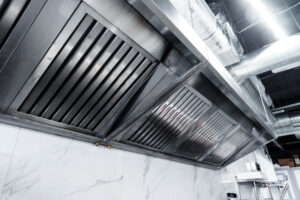
Your exhaust hood system is designed to do two things: remove heat and capture grease before it becomes a hazard. When the system is clean and functioning correctly, it performs both jobs effectively. When it’s overloaded with grease buildup, it fails at both — and becomes the source of fire rather than its prevention.
This is why professional exhaust system cleaning is the single most impactful fire prevention measure a commercial kitchen can take.
NFPA 96: The Fire Safety Standard Every Ontario Operator Must Know
NFPA 96 — the Standard for Ventilation Control and Fire Protection of Commercial Cooking Operations — is the governing fire safety standard for commercial kitchens across North America, including all Ontario municipalities. It is adopted and enforced by Ontario’s fire code and referenced by Toronto Fire Services, Peel Region fire services, and municipal fire authorities across the GTA.
What NFPA 96 Requires
NFPA 96 mandates specific cleaning frequencies based on the type and volume of cooking your operation performs:
- High-volume cooking (charbroilers, solid fuel, wok cooking): Monthly cleaning
- Moderate-volume cooking (most restaurants, hotels, institutional kitchens): Quarterly cleaning
- Low-volume cooking (churches, seasonal operations, senior centres): Semi-annual or annual cleaning
NFPA 96 also requires that cleaning be performed by trained, certified technicians — not kitchen staff — and that each cleaning be documented with a signed service report. fire inspectors look for these records during inspections. Without proper documentation, you are considered non-compliant regardless of actual grease levels.
What Happens If You’re Non-Compliant
Non-compliance with NFPA 96 can result in failed fire inspections, orders to cease kitchen operations until violations are corrected, voided commercial insurance coverage (most policies have explicit NFPA 96 compliance clauses), and personal liability in the event of a fire. Beyond the legal and financial consequences, non-compliance means your kitchen is genuinely at higher risk of a grease fire — with real danger to your staff and property.
Commercial Kitchen Fire Safety: A Complete Prevention Framework
Fire prevention in a commercial kitchen is multi-layered. No single measure is sufficient on its own. Here’s how to build a complete prevention framework for your operation.
1. Regular Professional Exhaust Cleaning
This is the foundation. NFPA 96-compliant exhaust cleaning covers the entire grease path: the hood filters and canopy, all accessible and inaccessible ductwork sections, the exhaust fan and plenum, and the rooftop exhaust terminal. A certified technician will also inspect the system for damage, improper access panels, missing components, and other fire hazards that staff would not identify.
AquaForce Power Clean has performed exhaust system cleaning for over 26 years across Southern Ontario, serving clients including Scotiabank Arena (MLSE), Pearson Airport, Marriott, Sheraton, and hundreds of independent restaurants. Every service includes a signed NFPA 96 compliance certificate. Request a quote here.
2. Monthly Filter Inspection and Cleaning
Hood filters are the first line of grease capture. They should be inspected weekly during active service and cleaned monthly at minimum — more frequently during high-volume periods. Clogged or saturated filters reduce airflow, push grease deeper into the ductwork, and create surface ignition risks directly above your cooking equipment.
Filters should be soaked in a degreasing solution, scrubbed clean, and reinstalled only when fully dry. Damaged or warped filters must be replaced immediately — bent baffles do not capture grease effectively and may allow flames to enter the duct.
3. Daily Equipment Cleaning
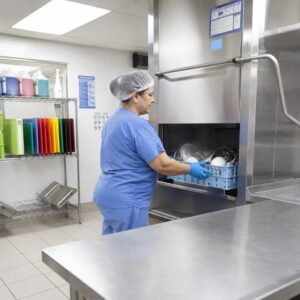
Grease accumulation begins at the cooking surface. Commercial kitchen cleaning that addresses surfaces, fryer areas, broiler trays, and cooking equipment drainage reduces the volume of grease vapour that reaches the exhaust system in the first place. This is the difference between a kitchen that needs quarterly cleaning and one that needs monthly service — daily habits at the equipment level directly impact your fire risk profile.
4. Fire Suppression System Inspection
NFPA 96 also requires that your fire suppression system — the wet chemical or dry chemical system installed above your cooking equipment — be inspected and serviced every six months by a licensed contractor. A suppression system that has not been inspected may fail to activate during a grease fire, or may discharge incorrectly and fail to suppress the flames.
Ensure your suppression system inspection is coordinated with your exhaust cleaning cycle. Many operators schedule both at the same time to simplify compliance documentation.
5. Staff Training and Kitchen Fire Protocols
Equipment maintenance and professional cleaning address the structural fire risk in your kitchen. Staff training addresses the human element. Every kitchen team member should know:
- How to safely manage a small pan fire (cover with a lid, never use water on a grease fire)
- Where fire extinguishers are located and how to use a Class K extinguisher
- How to manually trigger the fire suppression system if automatic activation fails
- Emergency evacuation routes and procedures
- Who to notify if they notice unusual grease buildup, unusual smells, or equipment malfunctions
6. Grease Trap Maintenance
While grease traps primarily address wastewater compliance, an overflowing or poorly maintained grease trap can push grease vapours back into the kitchen environment and increase the overall grease load in your ventilation system. Include grease trap inspection in your kitchen maintenance calendar.
Fire Safety for Different Commercial Kitchen Types
Fire risk profiles differ significantly depending on the type of operation. Here’s how to calibrate your fire prevention program by kitchen type.
High-Volume Restaurants and Fast Casual Operations
High-volume operations — particularly those using charbroilers, fryers, or wok stations — accumulate grease faster than any other kitchen type. Monthly exhaust cleaning is typically required by NFPA 96 for these environments. Grease buildup in ductwork can reach hazardous levels within four to six weeks during peak season. If you notice a visible grease drip from your exhaust fan housing onto the roof, your system is overdue for service.
Hotels and Banquet Kitchens
Hotel kitchens and banquet facilities often have large exhaust systems serving multiple cooking stations and multiple floors. These systems have greater duct run lengths, more horizontal duct sections (where grease pools rather than drains), and harder-to-access cleaning points. Quarterly NFPA 96 service is the minimum, but hotels like the Marriott and Sheraton properties we service often schedule service more frequently during peak event seasons.
Healthcare and Institutional Kitchens
Healthcare facility kitchens and institutional kitchens (schools, government facilities, long-term care homes) typically operate at moderate cooking volumes but face additional regulatory scrutiny from health authorities and fire marshals. Fire safety documentation must be complete and current at all times, as these facilities are subject to unannounced inspections. The consequences of a fire in a healthcare setting extend far beyond the kitchen itself.
Frequently Asked Questions About Commercial Kitchen Fire Safety
How often should commercial kitchen exhaust systems be cleaned for fire safety?
NFPA 96 sets the minimum standard: monthly for high-volume cooking operations (charbroilers, wok stations), quarterly for moderate-volume operations (most full-service restaurants), and semi-annually to annually for low-volume operations. Your cleaning contractor should assess your cooking type and volume at each visit and recommend adjustments to your service frequency as needed.
What is the most common cause of commercial kitchen fires in Ontario?
Grease accumulation in exhaust ductwork is the leading cause of commercial kitchen fires across Canada and the United States. Most commercial kitchen fires begin when accumulated duct grease ignites from a heat event at the cooking surface — a flare-up, a momentary burner surge, or a piece of food falling onto a burner. The fire then travels up through the ductwork and can breach the building structure. Regular exhaust cleaning eliminates this fuel source.
Does my insurance cover grease fires if my kitchen isn’t NFPA 96 compliant?
Most commercial property and restaurant insurance policies in Ontario include clauses requiring NFPA 96 compliance for coverage to apply in the event of a fire. If your exhaust system was not cleaned at the required intervals or you cannot produce signed service reports from a certified contractor, your insurer may deny the claim or reduce the settlement significantly. Always verify your policy’s specific requirements and keep your cleaning documentation on file.
Can kitchen staff clean the exhaust system themselves?
No. NFPA 96 explicitly requires that exhaust system cleaning be performed by qualified, trained personnel. Most municipalities in Ontario further require that the contractor carry WSIB coverage and liability insurance. Staff can and should clean hood filters regularly, but the ductwork, fan, and plenum components require professional equipment, chemical degreasers, and access techniques that kitchen staff are not trained or equipped to perform. Attempting to clean ductwork without proper equipment and training can also create slip and fall hazards on the roof and potential chemical hazards in the kitchen.
What should I look for to know if my exhaust system needs cleaning?
Warning signs that your exhaust system is overdue for cleaning include: visible grease dripping from the exhaust fan housing, strong cooking odours persisting in the dining room or adjacent spaces, reduced airflow or a visible decrease in smoke capture at the hood, grease pooling in the plenum tray beneath the filters, and any visible dark staining or grease residue on the exterior of your exhaust stack on the roof. If you observe any of these signs, schedule service immediately regardless of when your last cleaning occurred.
Protect Your Kitchen — and Your Business
Commercial kitchen fire safety is ultimately about protecting the investment you’ve built and the people who work in your kitchen every day. A single grease fire can close a restaurant for weeks or permanently. The cost of professional exhaust cleaning — typically a few hundred dollars per service — is a fraction of the cost of a single fire incident, an insurance claim, or a failed fire inspection.
AquaForce Power Clean has been Ontario’s trusted commercial kitchen cleaning partner for over 26 years. Our NFPA 96-certified technicians serve restaurants, hotels, healthcare facilities, institutional kitchens, and large venues across the Greater Toronto Area and all of Southern Ontario — from Mississauga and Toronto to Hamilton, Oshawa, and beyond. Every service comes with full documentation and a signed compliance certificate.
Get a free quote for exhaust cleaning and fire safety services →
Don’t wait for a fire inspection — or a fire — to take action. Contact AquaForce today and make fire safety a permanent part of your kitchen maintenance program.