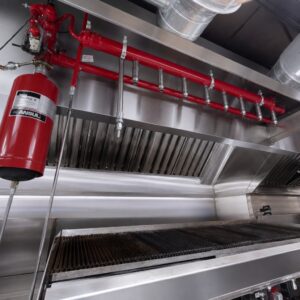
If you have ever booked a hood cleaning, you have probably heard the phrase “clean to bare metal” thrown around like it is some kind of obvious finish line.
It is not.
And honestly, a lot of confusion (and a lot of bad work) hides inside those four words. Especially in busy commercial kitchens where you are running hard every day, grease is constant, and inspections do not care that you had a crazy week.
So let’s slow it down and explain what “clean to bare metal” actually means for kitchen exhaust hoods, what it looks like in real life, and why it matters for fire safety and code compliance.
First, what people think it means
Most people assume “clean to bare metal” just means:
- No visible grease
- Looks kind of shiny
- Doesn’t smell
- Filters are clean enough
That is more like “surface clean” or “looks good from the floor.”
Bare metal is different. It is a standard used in professional exhaust system cleaning because grease buildup is not just cosmetic. It is fuel.
The simple definition (no fluff)
Clean to bare metal means all grease, oil, carbon, and sludge are removed from the exhaust system surfaces until you are left with the underlying metal surface.
Not “most of it.” Not “the parts you can see.” Not “we wiped it.”
Bare metal means the contamination is gone, including the stubborn film that likes to hang on in corners, seams, and behind access doors.
What areas does this apply to?
When a company says they clean a hood system to bare metal, they are talking about the full pathway where grease vapor travels, which typically includes:
1) Hood canopy (inside, not just the outside)
The inside of the hood is where grease accumulates first. A proper bare metal clean means:
- Inside panels are degreased completely
- Weld seams and corners are detailed, not skipped
- The grease trough and drip areas are fully cleared
If someone only polishes the outside faces and leaves the inside tacky, that is not it.
2) Grease filters
Filters should be cleaned so they are free of grease buildup, not just “rinsed.” You should not be able to scrape grease off them with a fingernail after they dry.
Also, filters are only one piece of the system. Clean filters with a dirty plenum still equals a dirty system.
3) Plenum (the area behind the filters)
This is the zone a lot of bad jobs ignore because it is less visible and more annoying to reach.
But if the plenum is greasy, you are not at bare metal. Period.
4) Ductwork (horizontal and vertical)
Grease travels. It cools. It sticks. Ductwork is where it quietly builds into thicker layers over time.
Bare metal duct cleaning means:
- Access panels are opened and used properly
- Grease deposits are removed from the duct interior
- No heavy buildup is left on duct seams, turns, or low spots
If the cleaner never created proper access (or never used existing access), there is a good chance they did not actually clean the ductwork.
5) Exhaust fan (and fan housing)
Fans get nasty. Grease on fan blades can throw off balance, reduce airflow, and increase fire risk.
Bare metal means the blades and housing are cleaned down to the metal surface, not left with a gummy coating. This part matters a lot because it is literally the last stop before grease exits the building.
What does “bare metal” look like?
It is not always mirror shiny. And this is where people get tripped up.
Bare metal can look like:
- Dull stainless steel
- Darkened areas from heat staining
- Scratches from normal wear
- Slight discoloration that is not grease
Bare metal does not mean the metal looks brand new. It means it is not coated in grease.
A quick way to think about it:
- Stain: discoloration that does not smear
- Grease: film that smears, feels slick, collects dust, or looks wet when light hits it
If you wipe a cleaned surface with a white cloth and it comes back yellow brown and oily, you are not at bare metal.
Common red flags that it was not cleaned to bare metal
A few things you can watch for after a service:
- The hood looks good outside, but inside feels tacky
- Filters are clean, but the plenum above them is still greasy
- You never saw anyone access the ducts or fan
- The fan is still visibly coated or dripping
- There is greasy runoff on the roof after the job
- No proper service report or before and after documentation
Also, if the job was incredibly fast for a heavily used kitchen, that can be a clue. Real bare metal work takes time. It is labor.
If you want it done properly in Southern Ontario
At AquaForce Power Clean, this is exactly the kind of work we focus on: commercial kitchen deep cleaning and exhaust hood and vent cleaning that is aimed at safety, sanitation, and code compliance, not just appearances.
If you are in the GTA or surrounding areas and want an on site estimate, you can request a quote here: https://aquaforce.ca/
Clean to bare metal is not a buzzword. It is the difference between “looks fine” and “actually safe.”
FAQs (Frequently Asked Questions)
What does ‘clean to bare metal’ mean in kitchen exhaust hood cleaning?
‘Clean to bare metal’ means removing all grease, oil, carbon, and sludge from the exhaust system surfaces until only the underlying metal surface remains. This includes thorough cleaning beyond visible areas, ensuring no stubborn film or buildup remains in corners, seams, or behind access doors.
How can I tell if a surface is truly cleaned to bare metal?
Bare metal surfaces may not be mirror shiny but should be free of any grease film. Key indicators include absence of smearable or slick films; wiping with a white cloth should not leave yellow-brown oily residues. Surfaces may have dull stainless steel appearance, heat stains, scratches, or slight discoloration that do not smear or feel greasy.
What questions should I ask my hood cleaning company to ensure proper bare metal cleaning?
Ask if they clean the full system (hood, plenum, ducts, fan) to bare metal; how they access ductwork and fans; whether they provide written reports and photos documenting the work; and if they follow NFPA 96 guidelines for cleaning frequency and documentation. Vague answers may indicate incomplete work.